There is a quiet shift happening in luxury real estate, and most of the industry has not noticed it yet.
Ten years ago, a cinematic listing video was remarkable. Five years ago, professional staging separated the serious from the casual. Today both are simply the cost of entry. A buyer touring at two million dollars expects drone footage, expects a designer's hand in every room, expects the twilight photography and the printed brochure. None of it moves them anymore. It only signals that nothing has gone wrong.
That is the strange position the industry now occupies. We spent a decade building a production standard, we achieved it, and the moment we achieved it, it stopped being persuasive. Excellence became invisible.
The question nobody is asking is the one that matters. If presentation is now the baseline, what is the actual differentiator?
What a Buyer Is Really Doing
Watch someone walk through a custom home for the first time. They are not auditing. They are not comparing the tile to the tile in the last house. They stand in a doorway a beat longer than they need to. They touch a stair rail. They look up.
What they are doing, though they would never describe it this way, is the same thing a person does standing in front of a painting.
They are deciding whether it moves them.
That is not a metaphor, it is a description of the actual cognitive event. In front of a canvas, no one is calculating pigment cost or canvas dimensions. They are having a subjective response, and then, only afterward, reaching for reasons to justify it. The specifications become the argument they make to themselves and to their spouse on the drive home. But the specifications were never the decision.
A custom home works identically. The buyer feels something in the entry, or does not, and everything that follows is rationalization. The square footage, the appliance package, the school district. These are the reasons offered for a conclusion already reached.
Which means the entire apparatus of luxury marketing has been optimized for the second half of the process while ignoring the first.
The Limits of Perfection
Here is the uncomfortable part. Flawless presentation is very good at supporting a decision. It is surprisingly bad at causing one.
A perfectly staged room communicates competence. It says the seller is serious, the property is maintained, the transaction will be professional. Those are real and valuable signals. But competence is not the same as feeling. A room can be immaculate and still say nothing about why it exists.
Something is lost when every surface has been optimized. The staged home is legible but anonymous, and the buyer standing in the doorway senses it. They cannot articulate what is missing. They just move on to the next showing.
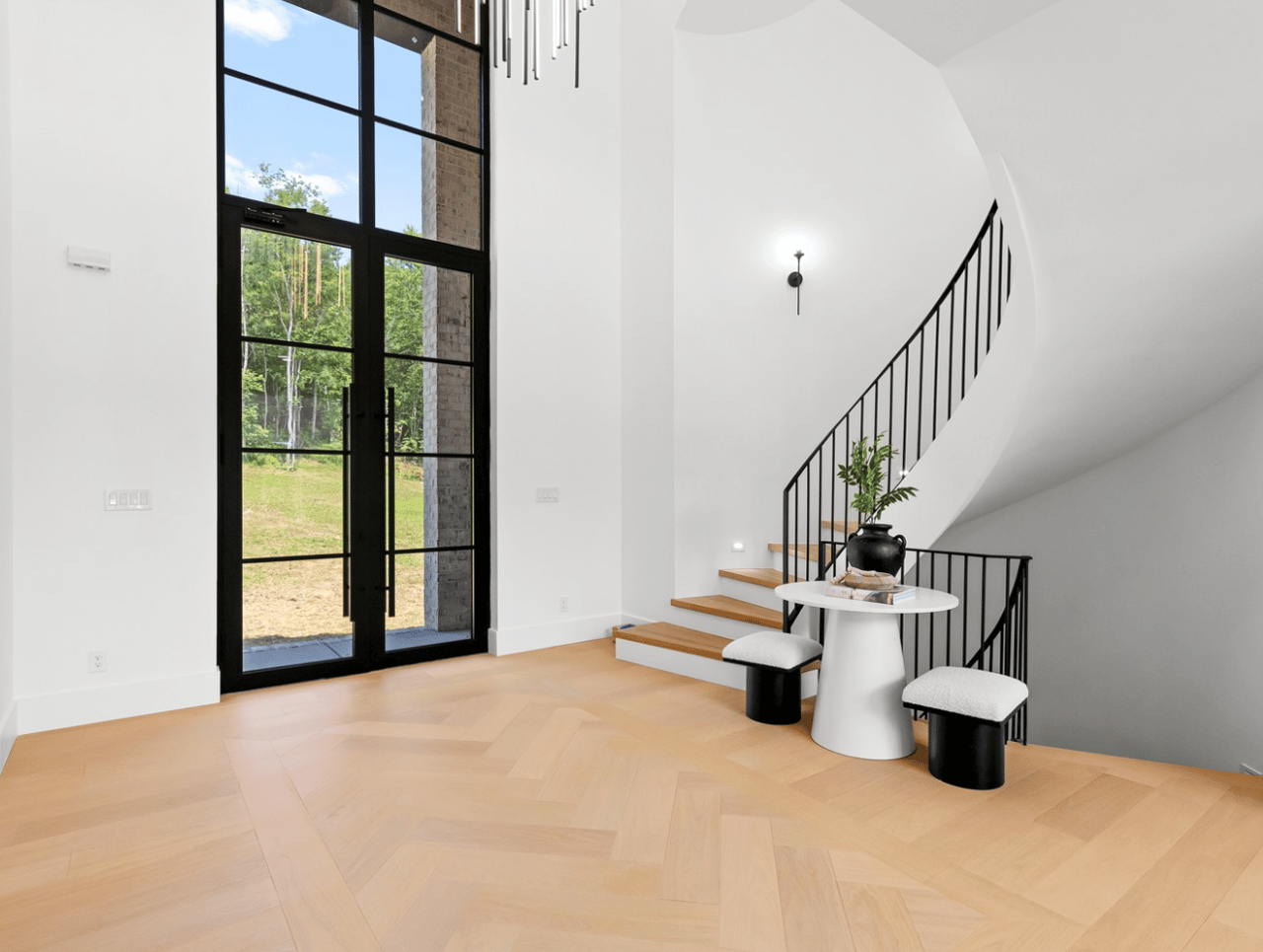
Meanwhile the thing that would actually move them, the intention behind the build, the reason the stair curves the way it does, the specific quality of afternoon light in the west rooms, goes entirely undocumented. It is present in the house. It is absent from everything said about the house.
Intention Is the Asset
Every serious custom home is the record of a thousand decisions. Where to place the window. Whether to spend on the invisible systems or the visible finishes. How much ceiling to give a room that did not strictly need it.
Most of those decisions cost money and generate no line item on a spec sheet. They exist purely as the difference between a house that was built and a house that was considered. A buyer registers that difference immediately and cannot name it. The market currently has no vocabulary for it and therefore no way to price it.
This is the great inefficiency in luxury real estate right now. The most valuable quality in a home is the one the industry has no method of communicating.
The work that separates a considered home from a competent one is legible to the person who made it and invisible to the market that receives it. It gets absorbed into a price per square foot that flattens it against everything else in the comparable set.
Where This Goes
The next differentiator will not be a better camera. The production ceiling has been reached and the returns on climbing further are close to zero.
It will be interpretation.
The properties that outperform will be the ones where someone did the work of understanding what was built and why, and then made that understanding legible to a buyer. Not a feature list. An argument. A point of view about why this house exists and what kind of life it was designed to hold.
That work is closer to criticism than to advertising. It requires actually looking at a house long enough to have a thought about it, which is a slower and less scalable activity than photographing it, and which is exactly why it will remain scarce.
It also requires a willingness to be subjective. A feature list is safe because it is verifiable. A point of view can be disagreed with. But a point of view is the only thing that has ever moved anyone, and the buyer standing in the doorway is waiting to be moved, whether or not anyone in the transaction understands that this is what is happening.
The Longer Frame
There is a version of this that goes beyond any single sale.
A house that sells for three million dollars is a transaction. A house that is understood, documented, and interpreted becomes something else. It enters a record. It has a story that survives the closing and attaches to the next sale and the one after that.
The finest homes in older cities carry that kind of provenance almost by accident, accumulated over a century of attention. Newer markets have not built it yet. Charlotte is building at a level of craft that will absolutely merit that attention in fifty years, and almost none of it is being documented in a way that will survive.
That is not a marketing problem. It is closer to an archival one. But it is going to become the marketing problem, because the buyers entering the top of this market increasingly think in those terms. They are not purchasing shelter and they are not purchasing square footage. They are purchasing something they intend to be understood as significant, and they are looking for signals that someone already understands it that way.
What Follows
None of this suggests abandoning production quality. The floor is the floor and falling below it is fatal.
But the next decade of luxury real estate will not be won by whoever shoots the most beautiful video. That race concluded and everyone tied.
It will be won by whoever looks at a house closely enough to understand it, and then understands it deeply enough to move someone.
Everything else is the argument the buyer makes on the drive home.


